
The U.S. Department of State has officially notified Congress about exporting General Electric F110 engines. These engines will power Turkey’s new KAAN fifth-generation fighter programme. This marks a massive step forward for the Turkish aerospace sector.
The notification clears a major hurdle for Turkish Aerospace Industries (TAI). It ensures the first batches of this flagship combat aircraft will have a highly reliable powerplant. Furthermore, the move signals a clear stabilisation in U.S.-Turkish defence trade relations after years of complex talks.
The KAAN was formerly known as the TF-X. It is designed to be Turkey’s premier air superiority fighter. Eventually, it will replace the Turkish Air Force’s ageing fleet of F-16s. Ankara has long-term plans to build a fully domestic turbofan engine through TEI (TUSAŞ Engine Industries). However, the General Electric F110-GE-129 will serve as the critical interim powerplant.
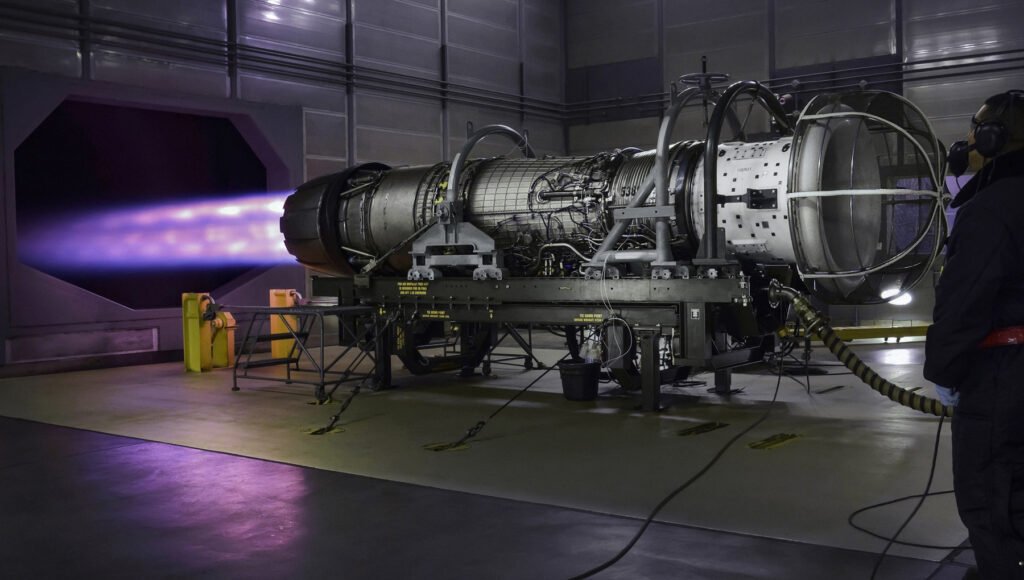
The F110 is a highly capable engine. It already powers many F-16 Fighting Falcons globally, including those in Turkey. Securing this export licence is vital for TAI. It helps them maintain the KAAN’s strict flight-testing schedule.
These engines are critical for Turk Aerospace Industries (TAI) in order to power prototypes and initial block 0 operational units until an indigenous alternative engine is fully developed. Turkey is highly optimistic about development of its indigenous jet engine. TEI-TF35000 is a turbofan engine being developed by the Turkish cooperation of Tusas Engine Industries (TEI) and TRMOTOR, designed to deliver 35,000 pounds of thrust.
A Thaw in Defence Relations
This export notification is important for its technological and geopolitical impact. Defence trade between Washington and Ankara has faced strict scrutiny recently. Most notably, this friction led to Turkey’s removal from the F-35 Joint Strike Fighter programme.
However, the State Department is now willing to advance the F110 export. This suggests a strategic choice to keep Turkey integrated with Western aerospace supply chains. After all, Turkey remains a crucial NATO ally.
This notification follows recent U.S. approvals to sell new Block 70 F-16s to the Turkish Air Force. Together, these moves indicate a broader normalisation of military trade between the two nations. Earlier this week, Trump said “I will probably do it”, answering the question regarding sale of engines and inclusion of Turkiye, back in F-35 programme.
What is Next for the KAAN?
The engine export is now moving through the final stages of the U.S. regulatory process. Consequently, TAI can confidently speed up the KAAN’s testing schedule. The aircraft recently completed a successful maiden flight. Next, it will undergo rigorous envelope expansion flights.
The first production models of the KAAN should enter the Turkish Air Force inventory before the end of the decade. Soon, the aircraft will shift from a prototype to an operational jet. The global defence market will be watching closely. Observers want to see if Turkey can field a cost-effective, NATO-interoperable alternative in the competitive fifth-generation fighter market.